
New site and updates at www.cmariec.com

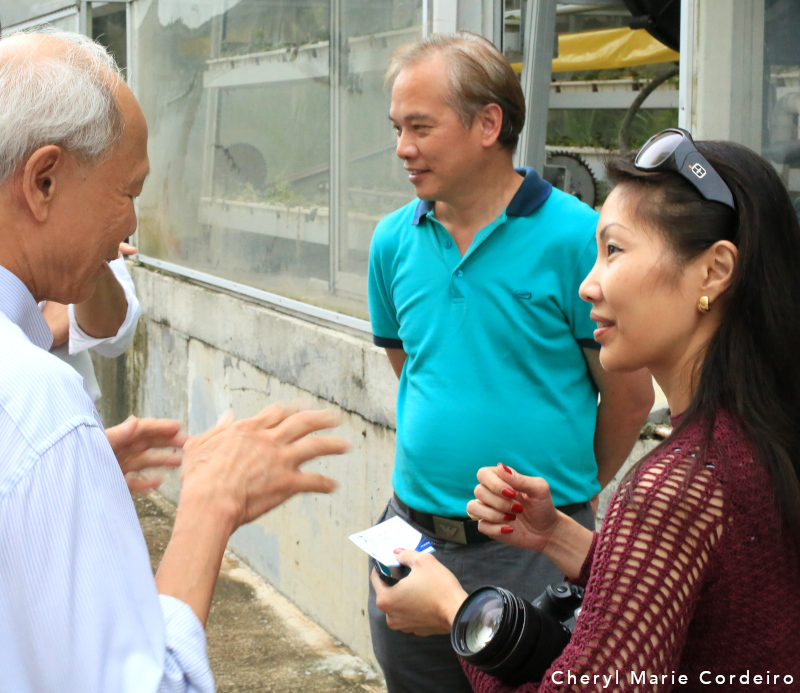
Photo by Kevin D. Cordeiro

We apologize for the few glitches we’ve experienced in the last few weeks on this site. In order to serve our readers better, with quicker downloads and hopefully a more reliable server, Cheryl Marie Cordeiro has now moved to a new site:

www.cmariec.com

www.cmariec.com/blog/

Welcome to more fun reading!

~Cheryl Marie Cordeiro

The Chanel 2.55 Classic

The Chanel 2.55 Classics and Reissues, my favourite colour being the one in ivory with gold chains.

What you put in your bag is very important to you…Traditionally, for a woman, a bag holds the things you need for the day, but it’s also your little beauty factory, which is very important to the identity of the woman. …the modern bag …by 1920, …became a symbol of women’s independence. It said she could go where she wanted to go, and didn’t need a man because he held all the possessions.

~ Farid Chenoune, author of Carried Away: All About Bags (2005)

Chanel bags have previously not appealed to me because I found the quilting too much mademoiselle. But I love bags with a story to tell and the Chanel 2.55 Classic quilted flap is one such bag. Launched in February 1955, hence its name 2.55, the quilted flap bag draws its inspiration into being, from many threads of Coco Chanel’s life, most of which came from the orphanage and convent, Aubazine in the south of France.

Coco Chanel wanted a bag that was hands-free, thus the double function of the chained handles to the bag, where one could wear the bag across the body or on the shoulder. The burgundy coloured lining in the original design for the black quilt flap 2.55s, came from the colour of Chanel’s school uniform at the Aubazine convent and the inspiration for the quilting came from several sources, including the stained-glass windows of the abbey at Aubazine, jockeys’ riding coats as well as her own light-brown suede cushions in her rue Cambon apartment in Paris. The open back pocket of the bag was where she stashed extra money and the zippered pocket was where she had her love letters. The iconic CC logo is still known today as The Mademoiselle Lock because Chanel never married and the honorific mademoiselle was the custom. The bags with the interlocking Cs are today known as The Classic, whilst versions of the bag relaunched by Karl Lagerfeld in 2005/6 are known as Reissues. The Reissues have a twist lock without the Chanel logo on the outside.

As a result of the popularity of this bag, the Chanel quilted Classics are one of the items most copied by the fake designer goods industry. Several starting points for identifying an authentic Chanel Classic 2.55 would be:

i. the interlocking Cs of the logo has to have the RIGHT ‘C’ overlap the LEFT ‘C’ at the TOP and the left C should always overlap the bottom of the right C (there are only one or two exceptions to this in limited edition pieces from Chanel).

ii. the quilting on each Chanel bag should align, almost perfectly. This is the same feature found in authentic Louis Vuitton bags, that the LV logos should align perfectly at all seams on Louis Vuitton bags. Quilting at the back open pockets in the Chanel Classics for example, must seem to camouflage the back pocket, to make it as if it did not exist to the eyes. Quilting on the front flap from the flap to the body of the bag should also align perfectly, creating a ’seamless’ quilted pattern, despite the front lock on the bag.

iii. all Chanel bags are either made in France or Italy, any stamping of manufacture elsewhere is a fake.

iv. Chanel uses flat head screws on their locks prior to recent years (ca. 2002ff), where today, they use the same or a similar 6-point star screw as do Louis Vuitton.

v. While Louis Vuitton uses an embossing method for their date codes, Chanel uses the hologram sticker that is likely to be destroyed if one tried to pry it loose from the base of the bag. These days, the hologram sticker contains a white sticker with the manufacture code, and a clear sticker over the white sticker. The clear portion of the sticker should contain gold flecks and it should have the words CHANEL CHANEL CHANEL to the right of the sticker and a solid black line to the left of the sticker. The sticker these days contains 2 Chanel logos, centered. Chanel also uses the number ‘1′ with a feet and has a slash through its number ‘0′.

I think the best giveaway feature to an authentic Chanel or Louis Vuitton bag is the quality of their make. This, one can feel by handling the bags themselves, observing the materials used and the stitching details on the bags. An authentic Chanel or Louis Vuitton bag will keep its shape even after years of wear, maturing and showing wear in a manner that is unreflected in a fake.

——————-oOo——————-

References

Bibliography

  • Baillén, C., 1974. Chanel Solitaire.
  • Charles-Roux, E., 1981, 2005. Chanel and Her World
  • Galante, P., 1973. Mademoiselle Chanel.
  • Koda, H., et al., 2005. Chanel.
  • Madsen, A., 1990. A Woman of Her Own.
  • Wallach, J., 1998. Chanel

A fuller publication list on Chanel can be found here.

Maria Gibson, at Midsummer’s in traditional folkdress

Maria in a traditional Swedish folkdress, hand-stitched and sewn. Photo by Robbie Nordin, Robbiesphoto.com.

For some years now, I have observed that Swedes have several forms of folk dresses and a National Costume, that they use on special, festive ocassions such as Midsummer’s. Sverigedrakten lends a good history of the folk dress, where the dresses displayed the wearer’s province of origin, their distinct style of clothing, their culture and history. Folkdresses went out of fashion around the mid-1800s, where these days, they can fetch enormous prices at auction houses due to that the textile to the dress was usually hand-loomed and then the dress hand-sewn. An approximate cost to a folkdress today would be around 15,000 kr to 20,000 kr, which is about USD $2,500 - $3,000 or SGD $4,000 - $4,500.

Maria Gibson (pictured above) told of how she had inherited this heirloom from her great grandmother. The inspiration of the dress came from a painting that Maria’s great grandmother saw in a church, in Högbo socken, outside of Sandviken. The fabrics were woven and the dress hand-sewn, lending much skilled crafting to details in the fabric and outfit. The dress Maria has on is a summer version of an ‘everyday’ dress. A winter version has a darker apron and a shawl.

A half-shot of Maria and the summer folkdress. Photo by Robbie Nordin, Robbiesphoto.com.

The woven fabrics were generally very warm, even in winter. And a vast number of materials were used, including heavy cotton, linen, wool, silk, leather and fur. Beads, embroidery and silver brooches made adornments and accessories to these dresses.

I think these dresses are simply gorgeous!

Drizzle

Before the rains came, there was a rather dry spell for south of Sweden. Watering the grass hardly made an impact, but the activity of it was no doubt, fun!

The grass is recovering well these days.

Drizzle outfit:

  • Pink straw hat from Stanley Market, Hong Kong.
  • Navy blue sailing jacket, the material of which is waxed linen and makes a good raincoat, by Henri Lloyd
  • Light blue V-neck cotton t-shirt, by Express
  • Fleece gym pants, by Moda International
  • ——————oOo——————

    Uncanny.

    Left: Huckleberry Finn. Right: Tom Sawyer. Illustrations from stories by Mark Twain.

    Midsummer’s Day 2008, in the Western Swedish archipelago

    Brrrrr! My first toe-dip of the season, and possibly my last. Missing the warm beaches at Singapore’s Sentosa Island. It would take quite a lottery win for me to go swimming in the sea this summer if the weather doesn’t let up!
    Outfit: A white crochet halter neck dress by BCBG Max Azria.

    This island in the western Swedish archipelago has its own tradition on Midsummer’s, where it was here that the Society of Arbores literally brought back forests and green life.

    For a number of decades every century, as long as anyone can remember, huge shoals of herring used to suddenly appear along the western Swedish coast. It is said that the sea was so full of herring that they could hardly find space to swim amongst themselves. During winter the fishermen could cut a hole in the ice and the herring would pour up onto the ice by themselves. While this might be of a slight exaggeration, the thing was that year after year the herring did indeed come back, by the millions. The most important periods were between 1747-1809, and then in 1877-1904.

    Classic picture of herring fishing along the western coast of Sweden in 1894. Note the barren cliffs in the background.

    The herring was beyond plentiful. There were so many that it took decades for the fishermen to even invent equipment to catch all this fish. Then came the next problem, what to do with the catch. It was soon obvious that you could only eat that many light salted, hard salted, fried, steamed, broiled, roasted, poached, baked, sautéed, stewed, minced, dried, pickled or smoked herrings before you got sick of it. Finally someone came up with the idea that this fatty fish could actually be processed for only its fat. Eventually, this oil turned into a most important export product for the southwest coast of Sweden, and it is said that street lamps as far away as Paris were lit by this herring oil.

    That processing however, asked for cooking and very soon the wood needed ran into a short supply. Actually pretty much everything that could burn was exhausted, right down to the moss. The devastating impact on the greenery and forests along this entire coast can still be seen today. In fact the bare cliffs of Bohuslän is still something of a natural tourist attraction. Most islands are also bare of trees, save one, which is Styrsö.

    The reforestation of Styrsö was mostly due to the next invasion - tourists - after the herrings had disappeared. By the mid 19th century, it was office and industrial workers from the cities that were discovering nature, and who were taught by the new health experts, that indulging in salty mud and seaweed baths were the things to do, to recover their strength after a long year of working in dark and dusty factories and offices. And thus, the natural island spa was born.

    So began a trail of steamers from the city to this island, landing their daily catch of bathing visitors all summer, and for several decades thereafter. Eventually these visitors decided to come together to do something about the deforestation, and they took it upon themselves to organize a reforestation program, founding in their wake in the early 1900s, the Society of Arbores, which dedicated itself to the reforestation of Styrsö.

    Many of these dedicated individuals were influential persons who could muster thousands of school children to come out to the islands to plant small trees, bought and grown by the Society of Arbores.

    The local inhabitants, mostly fishermen, sailors, small time farmers, smugglers (or pirates of sorts), occasional moon shiners and whatnot stood by and looked upon the activities in skeptical bewilderment. But eventually, many decided that this newly grown, rich access of fresh, green small tree plants all over the island, proved an excellent opportunity to venture into sheep farming. And this, they started as soon as the summer guests had gone home for the season.

    After many years of disagreement on priorities between the summer guests and locals - on reforesting the island or having sheep eat off the plants - a truce or a balance of nature was struck between the food supply and the grazing livestock.

    Some 100 years later today, local inhabitants of this island can now enjoy quite some lush, green vegetation all over the island AND order their slaughter of lamb for the autumn and winter festive seasons, giving in to the odd sight of some stately trees around here being strangely nibbled at their tops.

    The Arbores flag, proudly flying atop this year’s Midsummer Pole.

    The Society of Arbores is still active today and it is they who take upon themselves to organize the annual great Midsummer’s celebration, with music, song, dance, lotteries and games for both adults and children.

    One of the antique lottery bins, used for lottery tumbles in favour of worthy causes for the islands.

    And at this happy occasion, what makes a special appearance are the green lottery tumblers that were once used to collect funds for buying in plants and trees for this island. And every year at Midsummer these wooden barrels, still in their original green paint, are used to collect funds to other worthy purposes.

    To this day and age, coincidence or not, the traditional and indispensable dishes that need to stand on each Swedish table at the Midsummer festivities are salted pickled herring and fresh potatoes to be downed by generous helpings of strong Swedish Schnapps or spiced (absolute) pure alcohol bumpers. Each piece of herring is usually accompanied by a drink and a song. This year the singing on this island was heard through the night till at least 3 o’clock in the morning, when the sun was already well on its way up. The day after, was very silent.

    Midsummer’s Eve 2008

    I know a bank where the wild thyme blows,
    Where oxlips and the nodding violet grows,
    Quite over-canopied with luscious woodbine,
    With sweet musk-roses and with eglantine

    ~William Shakespeare, A Midsummer Night’s Dream, II (i).

    Sitting at the foot of the Midsummer pole. Western archipelago of Sweden, 2008

    The weather is ever changing this Midsummer’s Eve, which marks the ancient middle of summer or the summer solstice. It is during this time that even south of Sweden experiences hardly any night and where night is marked these few days with a long dusk that turns to dawn.

    Midsummer’s Eve atmosphere, in the southern archipelago of Gothenburg.

    A midsummer celebration was a Swedish tradition already before Christianity. Traditionally it was the summer solstice that was recognized as a time of celebrating fertility, the pretty straightforward symbol of which is the Midsummer Pole, covered in mid-summer plants which were also thought to have miraculous healing powers. Still every year in Sweden people will gather and dance around the Midsummer Pole. It’s a point of tremendous festivity in Sweden where in foregone years, bonfires were even lit to protect against evil spirits that were believed to roam freely as the sun turned south again.

    Video: Dancing around the Midsummer Pole, 2008

    The weather is as grey as the picture reflects these Midsummer days but it certainly did not stop the Swedes from dressing and raising their Midsummer Pole, roping in their kids to bring them to dance around the pole with “The Hopping Frogs” and all kinds of traditional summer songs. Standing by the sideline, it was sometimes difficult to tell which group thought the singing and dancing most fun, the children or the adults. At times, the children seemed more skeptical about the whole thing, while the parents seemed to let go of their office stress, and were truly having FUN!

    Apart from dancing around the Midsummer Pole, other activities such as lottery was drawn. All lottery tickets were placed into antique rolling bins, each about a 100 years old, still in their original green paint.

    There was no candy win (nor coffee win, at another lottery) for me this year, but I was certainly enjoying myself (video).

    I’ve also attached some beautiful pictures (below) by Anders Thorsell, from ffagency.com, on Midsummer celebrations in Härnösand, which is further north from Stockholm. Enjoy the pictures and Glad Midsommar!

    ——————————oOo——————————

    Picture gallery by Anders Thorsell, taken in Sundsvall and Härnösand:

    Meeting with Geoffrey Pereira: exploring expression in photography

    Part of Geoffrey’s Fabrics portfolio. Model: Vanessa Tarachin. Photo by Geoffrey Pereira.

    Geoffrey Pereira (left).

    Journalist Geoffrey Pereira and I met whilst he was on a visit to Gothenburg, for the World Editor’s Forum that took place in early June, 2008.

    It was wonderful meeting a fellow Singaporean on foreign soil and Geoffrey shared that, while managing a small IT department in Singapore Press Holdings, he had cultivated a passion of another sort, one that allowed for self expression beyond words, that of photography.

    I had the opportunity to browse through Geoffrey’s themed photography portfolio. The above bare-backed picture of a woman with saturated colour swirls, is one obtained from his Fabrics portfolio, where he experimented with expressing the female form against various types of fabrics, the colours and textures of the fabric contrasting to the pallor of skin.

    A portfolio that caught my particular attention was what Geoffrey called his Trash Bag Project, where he worked with cutting and stitching pieces of trash bags to form wearable outfits.

    Model: Margaret in block primary colours. Photo and outfit designed / produced by Geoffrey Pereira.

    Model: Margaret in dotted primary colours in the form of apples. Photo and outfit designed / produced by Geoffrey Pereira.

    I wondered, of the plethora of possibilities and of all paradigmatic choices in textile exploration, why trash bags?

    What came to mind personally was early 20th century artists like Hans Arp (1887-1966) and Piet Mondrian (1872-1944). Two artists I just had looked at in the MET and MoMA in New York and also at the Tate Gallery of Modern Art in London. Both stylistically focused on balanced designs and primary colors but fundamentally concerned with questions of hope and hopelessness and if technology will eventually save us or destroy us.

    Would not Geoffrey’s Trash Bag Project, with the purchase of inexpensive disposable materials from the grocery store and the subsequent manufacture and draping of these ‘clothes’ on our bodies express the same fears as the early Dadaists of the 20th century? Or as I have referenced in a previous article, Marcel Duchamp and his ready-mades?

    But Geoffrey told that it was rather that he was looking to explore planes of expression in photography. He wasn’t really into women as pretty objects:

    I was a little tired of the usual type of photo shoot. Bikini, lingerie “high-fashion” and what I call “pretty-pretty” girl photography. I wanted something different.

    I personally would not call the trash bag creations “fashion”. Really. If it comes across like that, it’s accidental. But I’m discovering things along the way. I think the way Margaret poses may suggest fashion.

    Tough tattooed Louise, in a pretty-girl pose which she calls “irony” and someone else calls weird styling. ~ Geoffrey Pereira.

    From Geoffrey’s Body Art portfolio, Louise in a different expression, by Geoffrey Pereira.

    With Geoffrey’s various expressions via photography and his Trash Bag Project, my mind wandered to the New York painter who literally painted underground, Keith Haring who truly became a recognized artist by accident.

    A Keith Haring reminiscent Trash Bag dress and design by Geoffrey Pereira. Photo by Geoffrey Pereira.

    Keith Haring worked by painting empty walls in the New York Subways. He looked at the graphic language in public signposts saying things like Ladies Room, Men’s Room, Zebra Stripes as in Walk Here signs, Men at Work etc. and took this explicit public sign language and transferred it into the private and most intimate parts of private live, and eventually went from graffiti to the most famous of the Art Saloons. Clothes being a public statement of our most private feelings, a sublime relation.

    Moving in the likes of Christian Joy? Design and photo by Geoffrey Pereira.

    As we talked I discovered that Geoffrey has other upcoming photography sessions and clothes project, to do with exploring parallel themes with other materials such as serviette paper and paper or trash bags in more exotic colours such as purple, green, orange etc. And in this day and age of eco-awareness, perhaps Geoffrey’s ‘disposable wear’ has its place in modern art, which is forward, thought provoking and intriguing. Much perhaps also in the likes of Christian Joy.

    And with these thoughts, I couldn’t help but find myself looking forward to an
    exhibition of Geoffrey Pereira’s work in the near future.

    Western Swedish Academy of Gastronomy: prize giving ceremony and gala event, 2008

    The setting makes half the event and what better fitting place is there in Göteborg for a grand dinner than the 350 year old Torstenson Palace, now the private residence of the Governor of Gothenburg and his wife, Lars and Ann-Christin Bäckström.

    Every year, the Western Swedish Academy of Gastronomy holds a traditional dinner in recognition of the most outstanding chefs and all things gastronomical in Western Sweden.

    Awards and prizes are given out, after which a dinner that seldom fails to impress the hardiest bon vivants, is served. Continue reading ‘Western Swedish Academy of Gastronomy: prize giving ceremony and gala event, 2008′

    Superheroes: Fashion and Fantasy exhibition at the Metropolitan Museum

    Nibbling the Big Apple X

    Outside the Metropolitan Museum, New York.

    Since its opening in early May, the Superheroes: Fashion and Fantasy exhibition at the Metropolitan Museum has drawn quite some media attention with numerous write-ups, press conferences and an opening night gala dinner, where all invited were supposed to dress to the superheroes and fantasy theme. My favourite evening wear for the night was an elaborately padded silver gown by Chanel, donned by Anna Wintour.

    I couldn’t well pass up on the chance to view this exhibition at the Met, when in New York. Continue reading ‘Superheroes: Fashion and Fantasy exhibition at the Metropolitan Museum’

    Summer cooling with denim shorts and strawberry wine

    Cool blue in the summer.

    I find denim shorts a long time staple when it comes to hot weather. Whether in Southeast-Asia or Scandinavia, denim shorts seem to appear in various cuts and lengths when sweltering temperatures set in. This season, I’m once again grateful I have these to don.

    With the insisting sultry temperatures in Sweden, a perfect accompaniment in mind is lemon sorbet in frozen strawberry wine, topped with champagne before serving.

    Sorbet with sparkling wine at ChikaLicious in New York. Photo by ChikaLicious.

    The idea is very much like the sorbet with sparkling wine at ChikaLicious for St. Valentine’s Day 2008, but with a slight twist of champagne.

    Lemon sorbet in frozen strawberry wine and champagne

    What you’ll need:

  • Lemon sorbet
  • Your favourite strawberry wine
  • Your favourite champagne
  • Place the strawberry wine into the freezer. Let stand for at least 2 hours. Fill half the dessert glass with frozen strawberry wine. Add a scoop of lemon sorbet to the wine. Fill up the remainder of the glass with your favourite champagne and serve.

    Agent Provocateur: Heating It Up

    Putting a whole new meaning to micro-mini and the ‘naked dress’.

    Where I am, it’s almost as if we’re experiencing a heat wave of sorts. And Agent Provocateur, maker of exotic lingerie is heating up this summer in their own way, with their 2008 bikini collection.

    I thought this frilled cerise Arianna bikini set with detached puff sleeves was most intriguing of their 2008 collection. I’ve only ever noticed frilled skirts on either little girls’ swimwear or swimwear for the more mature figure, the frills being more of a skirt that falls over the bottom, as a cover-up.

    In the above bikini, the puff sleeves and frilled skirt throws the bikini into the genre of barely-there dresses, with most everything of the dress removed, save sleeves and mini-skirt. What they’ve produced, is a celebration of sorts, it’s beyond micro-mini.

    The cutting looks super and the cups are padded for that extra lift - important details for the day out in the sun!

    Très sexy!


    eXTReMe Tracker